
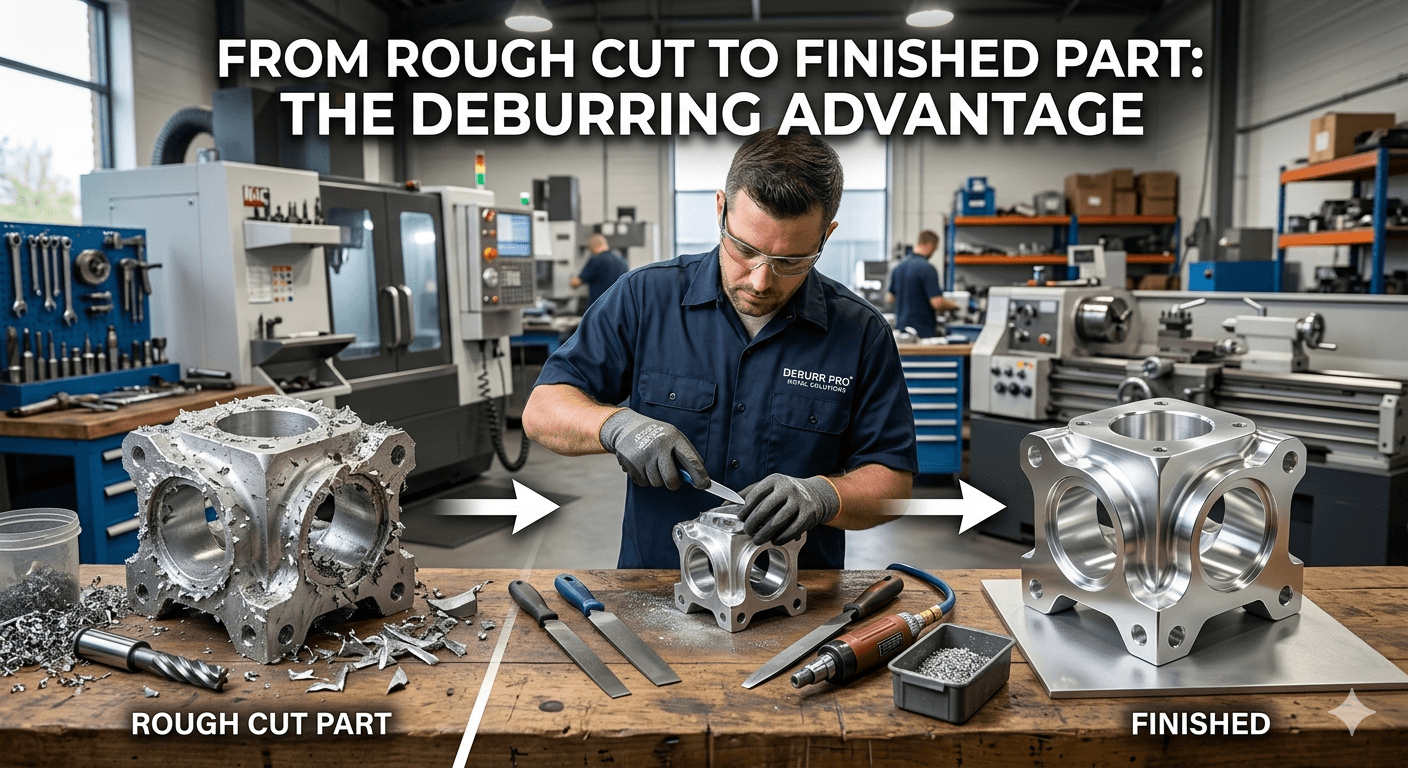
Every cutting operation creates some form of burr or edge roughness that must be removed before the part can be considered finished and ready for its intended purpose. The final leg of the journey from raw material to functional part is the proper edge preparation. Whether you are using laser cutting, plasma cutting, waterjet cutting or traditional mechanical methods such as shearing or sawing, edge preparation is a critical final step. This is the crucial processing that our deburring machines do: Turning rough-cut workpieces into precise components, ready for assembly, coating, welding, or end use.
Edge finishing is a universal need for all cutting methods.
All cutting processes, with their wide variety of mechanisms and capabilities, share one characteristic: they produce imperfect edges that need to be postprocessed to satisfy functional specifications. Laser cutting produces heat affected zones and fused burrs that can decrease the weldability and corrosion resistance. The plasma cut produces rough edges with oxide buildup and dross that has to be cleaned up for proper fit up. Washboard patterns and edge irregularities can occur, but waterjet cutting produces relatively clean edges (compared to thermal methods). Mechanical cutting methods like shearing, punching and sawing produce specific edge geometries that need specific finishing approaches.
The universality of the edge finishing requirements implies that any fabrication operation working with cut parts requires deburring capability irrespective of the cutting methods employed. Our deburring machines handle all these conditions and offer a complete solution for edge finishing in all your cutting operations. One investment in equipment that can handle a variety of edge conditions makes for easy buying and training, and consistent quality regardless of the source cutting process.
Precision Control Systems for Reliable Repeatable Results
Our equipment comes with a range of deburring modes to fit your specific processing need, from light cleanup passes to cosmetic improvement to aggressive material removal in prep for precision machining. The speed and pressure can be varied to process different materials and thicknesses without compromising quality or damaging sensitive workpieces. The intuitive control systems recall your preferred parameters for each job so that consistent results are always achieved when a particular part type runs.
Additionally, the programmable control provides the operator with the ability to specify exact requirements for edge radius, surface finish parameters and depth of material removal. This level of control means every piece is identical to spec, removing the variation seen with manual processing. This consistency is critical for compliance and quality assurance for manufacturers producing parts for regulated industries such as medical devices, automotive or aerospace.
Quality that Affects Everything in Your Business
Deburred edges are stronger, safer to handle and more compatible with subsequent manufacturing operations such as painting, powder coating or welding. They seal better in gasket applications and fit more accurately in assembled products, reducing leak paths and operational issues. How you finish the edges of your products has a direct impact on their perceived value and thus customer satisfaction and brand reputation. In competitive markets, the consistency and quality of your finished parts can be the difference between winning or losing customers.
Properly processed edges through our deburring equipment also have less risk of injury during handling and assembly, lessening workers compensation claims and improving workplace safety. The reduced hazard also makes packaging and shipping easier, because parts can be handled without the elaborate precautions needed for sharp-edged parts. Those operational advantages multiply across your production volume to create meaningful cost reductions in your operation.
Return on Investment – The Basis of Business Growth
Investment in deburring equipment gives multiple dividends at once. Automated processing replaces manual finishing operations, reducing labor costs and allowing skilled workers to focus on higher-value activities. The consistent processing that always meets specifications yields lower rejection rates and, hence, lower quality costs. Quick-change tooling systems mean faster changeovers and higher throughput, leading to lower production costs.
Perhaps most importantly, your ability to add new business increases without a corresponding increase in labor or equipment investment. Automated deburring is very scalable, so you can increase your capacity without the bottlenecks of manual processing. As your business grows and order volumes increase, your deburring capacity grows with you, allowing you to grow without the growing pains that plague many fabrication operations.
