
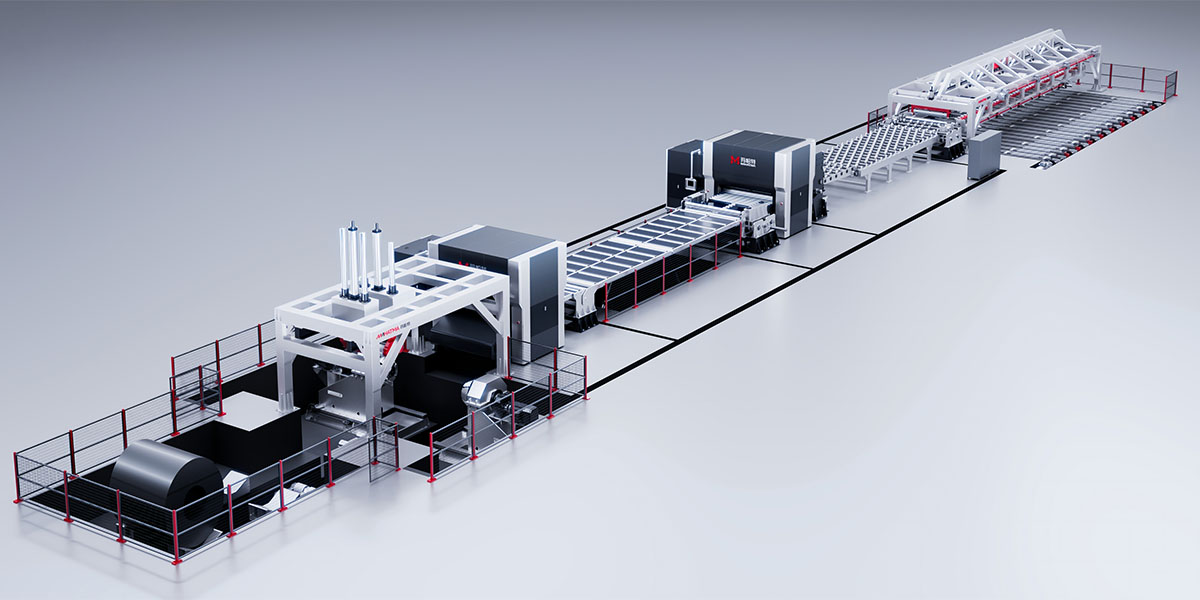
Introduction to Coil Leveling Machines
Coil leveling machines play a vital role in the metalworking industry, primarily aimed at transforming metal coils into flat sheets, strips, or plates suitable for various manufacturing processes. These machines are essential for achieving a uniform thickness and surface finish, which is crucial for the subsequent stages of production. Coil leveling not only enhances the material’s usability but also significantly impacts the overall quality of the end products.
There are several types of coil leveling machines, each designed to serve specific purposes. Typically, they utilize rollers to straighten and flatten coiled metal, which can include various materials such as steel and aluminum. The operation of these machines involves feeding the coil through a series of rollers that exert pressure, thereby removing any internal stresses and imperfections, leading to a flat and smooth surface. This is particularly important in industries such as automotive, construction, and appliance manufacturing, where precision and reliability are paramount.
The applications of coil leveling machines are diverse, catering to different sectors within the metalworking field. For example, in the steel industry, coil leveling machines are often employed to prepare materials for further processing, such as cutting or stamping. In addition to steel, these machines effectively handle other metals, expanding their utility in the fabrication of products like roofing sheets and automotive components.
The significance of coil leveling cannot be underestimated, as it directly affects the manufacturing process’s efficiency and output quality. Without proper leveling, the coiled materials may lead to complications during processing, resulting in defects that can compromise the integrity of the final products. Therefore, the adoption of advanced coil leveling machines is a strategic move for manufacturers seeking to enhance productivity and ensure product excellence.
How Coil Leveling Machines Work
Coil leveling machines play a pivotal role in the processing of metal coils, facilitating a range of applications from automotive to construction industries. These machines are engineered to flatten and prepare coils for subsequent manufacturing processes, ensuring uniformity and precision in the material. At the core of their operation are key components such as the leveling rollers, feed mechanisms, and control systems, all of which work in harmony to achieve desired outcomes.
The leveling process begins when a coil is fed into the machine, where it is securely positioned. The feed mechanism ensures a smooth entry, usually utilizing automated features to enhance operational efficiency. Once in position, the coil is subject to multiple leveling rollers designed to exert both pressure and tension. These rollers are strategically arranged to control the flattening effect, invoking selective pressure at various stages. The careful adjustment of roller alignment and pressure is crucial as it profoundly impacts the material’s flatness and mechanical properties.
Modern coil leveling machines integrate advanced technology to achieve unprecedented precision. Computer numerical control (CNC) systems allow for automated adjustments in real time, responding dynamically to the material’s characteristics. Moreover, sensors incorporated within the machinery provide continuous feedback, ensuring consistent performance. These technological enhancements not only increase throughput but also minimize material waste, making operations more economical. The seamless integration of multiple techniques, including electronic controls and hydraulic systems, empowers operators to fine-tune processes further, yielding superior results.
In conclusion, understanding the mechanics of coil leveling machines is key to appreciating their extensive applications. From the foundational components to the sophisticated technology that drives these machines, every aspect is crucial in delivering high precision in metal coil processing.
Benefits of Using Coil Leveling Machines
Coil leveling machines have become an essential component in modern manufacturing processes, offering numerous advantages that significantly enhance production efficiency. One of the primary benefits of utilizing these machines is the substantial improvement in efficiency. Coil leveling machines are designed to remove any curvature or coil set from materials, resulting in straighter and more uniform sheets. This precision not only speeds up the entire production process but also minimizes the downtime typically associated with reworking or scrapping improperly processed materials.
Another significant advantage pertains to cost savings derived from better material utilization. By leveling coils before they undergo further processing, manufacturers can significantly reduce waste and maximize their return on investment for raw materials. Moreover, accurately leveled coils optimize the cutting process, allowing for more efficient use of materials and reducing excess scrap. Over time, these cost savings can accumulate, leading to a more sustainable and profitable operation.
In addition to efficiency and cost benefits, coil leveling machines play a crucial role in enhancing product quality. The precision leveling process leads to uniform thickness across sheets, which is vital in ensuring that the final products meet strict industry standards. Improved flatness not only affects the appearance of the product but also has functional implications in applications where high tolerances are necessary. Consequently, by implementing coil leveling machinery, manufacturers can produce higher-quality components that meet customer specifications consistently.
In conclusion, the advantages of using coil leveling machines are clear. The combination of improved operational efficiency, cost savings through optimal material utilization, and enhanced product quality creates a compelling case for their integration into production lines. For manufacturers looking to stay competitive in the market, these machines represent an invaluable investment in both productivity and quality assurance.
Applications of Coil Leveling Machines in Industries
Coil leveling machines are essential tools across various industries, playing a critical role in the processing of steel coils and other metal sheets. Their ability to flatten materials effectively is crucial for ensuring that subsequent manufacturing processes yield high-quality products. One of the primary sectors employing these machines is the automotive industry, where precision and uniformity are paramount. In automotive manufacturing, coil leveling machines are utilized to prepare metal sheets for stamping and other processes that will form components like body panels, frames, and more. The leveling of these materials minimizes defects that could affect the vehicle’s structural integrity and aesthetic appeal.
Another significant industry that benefits from coil leveling machines is construction. Steel and aluminum coils are commonly used in building construction, for applications ranging from roofing materials to structural supports. By ensuring that these materials are perfectly leveled, the machines enhance the efficiency of the fabrication processes, enabling contractors to work with precision and reducing the likelihood of errors. In this sector, achieving a flat surface can greatly impact the strength and longevity of the installed materials, thereby influencing overall project success.
The manufacturing sector is perhaps the broadest user of coil leveling machines. This includes industries producing appliances, furniture, and heavy machinery, where metals need to be flattened before further processing. Coil leveling machines ensure that metal sheets are ready for cutting, bending, and welding, which are vital steps in product creation. The adoption of automated coil leveling technology has led to improvements in production speeds and quality consistency, making it indispensable in modern manufacturing workflows. Through these applications, coil leveling machines have proven to be critical contributors to operational efficiency and product quality across various industries.
FAQ:Coil Leveling Machines
1. What is a coil leveling machine?
A coil leveling machine is industrial equipment designed to remove coil set, edge waves, center buckles, and residual stress from metal coils. By passing the material through multiple precision rollers, it produces flat, dimensionally stable sheets ready for further processing.
2. Why is coil leveling necessary?
Metal coils often develop curvature and internal stress during rolling and winding. Without leveling, these defects can lead to poor cutting accuracy, stamping issues, welding misalignment, and increased material waste. [blog.level…ng-mht.com]
3. What materials can a coil leveling machine process?
Most coil leveling machines can process carbon steel, stainless steel, aluminum, copper, galvanized steel, and other metal sheets, depending on the machine’s specifications and roller design.
4. How does a coil leveling machine work?
The machine repeatedly bends the metal strip through alternating upper and lower rollers. This controlled bending exceeds the material’s yield point, redistributing internal stresses and restoring flatness.
5. What industries commonly use coil leveling machines?
Coil leveling machines are widely used in:
- Sheet metal fabrication
- Automotive manufacturing
- Aerospace components
- Home appliance production
- Construction materials
- Laser cutting and stamping operations
6. What is the difference between a leveler and a straightener?
A leveler focuses on achieving high flatness and relieving internal stress through multiple work rolls, while a straightener is generally used to correct simple bends or curvature in bars, strips, or profiles. [blog.level…ng-mht.com]
7. How do I choose the right coil leveling machine?
Selection depends on:
- Material type
- Sheet thickness
- Coil width
- Yield strength
- Required flatness accuracy
- Production volume
Testing actual material samples is often recommended before purchasing. [blog.level…ng-mht.com]
8. What thickness range can a coil leveling machine handle?
The processing range varies by model. Precision levelers can handle very thin materials, while heavy-duty machines are designed for thicker plates. Some models are capable of processing materials from approximately 0.05 mm up to 6.0 mm thickness. [mahatma.com.cn]
9. Can a coil leveling machine improve laser cutting quality?
Yes. Properly leveled sheets maintain consistent surface height, resulting in more accurate laser focus, cleaner cuts, reduced scrap, and improved finished-part quality. [blog.level…ng-mht.com]
10. What maintenance does a coil leveling machine require?
Regular maintenance typically includes:
- Roller cleaning
- Lubrication of moving components
- Gearbox inspection
- Alignment checks
- Electrical system inspection
Routine maintenance helps ensure long-term accuracy and machine reliability.
11. How much flatness can a precision leveling machine achieve?
According to the manufacturer, precision leveling systems can achieve flatness results as low as ±0.05 mm under appropriate application conditions, although actual results depend on material properties and incoming coil quality. [blog.level…ng-mht.com]
12. What are the benefits of investing in a coil leveling machine?
Benefits include:
- Improved sheet flatness
- Reduced residual stress
- Better downstream processing quality
- Higher production efficiency
- Lower scrap rates
- Improved dimensional consistency of finished parts
